The majority of Alirio Diaz International Guitar Festival concerts take place in the former Capuchin Convent of Quartu Sant’Elena. Find out more about this unique heritage site.
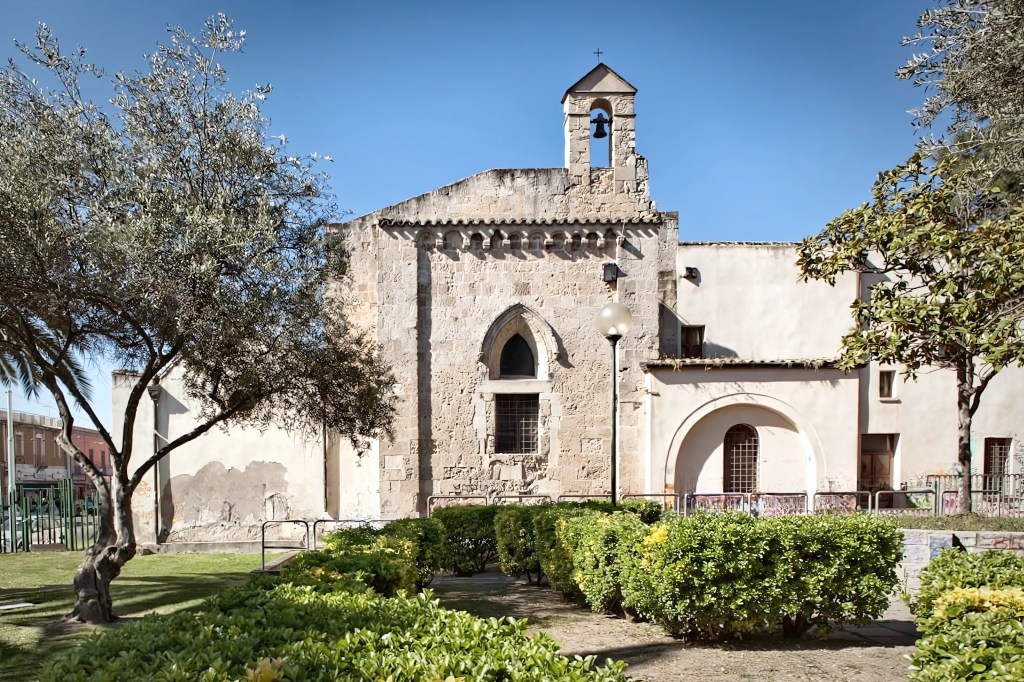
Church of sant’agata
The Church of Sant’Agata was built by Tuscan craftsmen in Romanesque style around the mid-12th century. Constructed in carefully cut ashlar masonry, it originally featured a single nave, a large east-oriented semicircular apse vaulted in a semi-dome, a wooden roof supported by quarter-circle stone corbels, and a floor made of gravel and sand bound with lime mortar. Externally, crowning the perimeter walls, ran a series of blind round arches with double archivolts sharply cut at the edges, resting on substantial corbels richly decorated by skilled stonemasons. The church was most likely erected at the request of the Bishop of Cagliari, to whom it belonged, and who maintained adjacent to it a tower house and a large garden.
In the final decades of the 13th century, the building was reconstructed—again in ashlar masonry—upon the foundations and part of the walls of the earlier structure, reusing some of its materials. The work was carried out by local craftsmen influenced by the earliest Tuscan-Gothic examples introduced to Cagliari at the time by master builders from overseas: the Church of San Francesco di Stampace and the transept of the Cathedral of Santa Maria di Castello. Equal in size to its predecessor, the rebuilt church featured a single nave, a lime-and-sand floor, a wooden roof supported by stepped stone corbels, and a square apse (known as a “scarsella”) vaulted with a ribbed cross vault and illuminated by a tall mullioned window with an external eyebrow arch. Externally, the upper perimeter walls displayed pointed single-arch mouldings—trilobed, serrated, and lancet-shaped—and on the right side, several reused Romanesque elements.
In 1631, Ambrogio Machin, Bishop of Cagliari, donated the church and the adjacent land (still belonging to the archiepiscopal estate) to the Capuchin Fathers, so that they could restore the church and build their convent on the adjoining site. The church, rededicated to Saint Francis, was adapted according to the Order’s requirements. The façade was rebuilt, the deteriorated wooden roof was replaced with barrel and finely ribbed cross vaults over the nave, the presbytery (created in the final section of the nave), and the three chapels constructed along the right side by 1702. These chapels were funded by wealthy and devout families of Quartu—namely the Loddo, Pillai, and Spiga-Piras families—who were granted burial rights for themselves and their descendants.
Following the suppression laws of 1866, the church, convent, and related properties were expropriated by the State and, in 1868, transferred by the Asse del Culto to the Municipality of Quartu for a symbolic price. The church remained open for worship until 1900, when, after certain alterations, it was converted to civic uses, including as a school. From 1926 onward, it was once again used for religious services by the clergy of the parish of Sant’Elena, at the request of Monsignor Virgilio Angioni of Quartu, founder of the Istituto del Buon Pastore, who had been granted the adjacent former convent. Restoration works carried out between 1990 and 1996, funded by the municipal administration, restored the building to its Capuchin appearance as it had developed between 1631 and 1702. The foundations, fragments of the original flooring, and sections of the Romanesque apse walls were also uncovered and left visible.
Among the furnishings of particular interest are:
In the presbytery, the oil painting on canvas depicting Christ on the Cross with Saint Francis and other Saints (c. 1647), attributed to the Genoese painter Orazio de Ferrari; and the Capuchin-style tabernacle, designed as a classical wooden temple, carved, sculpted, and inlaid (early 18th century), created by a lay brother.
In the first chapel, the oil painting on canvas depicting the Vision of Saint Felix of Cantalice (mid-17th century), signed by the Majorcan painter Bartolomé Llevante.
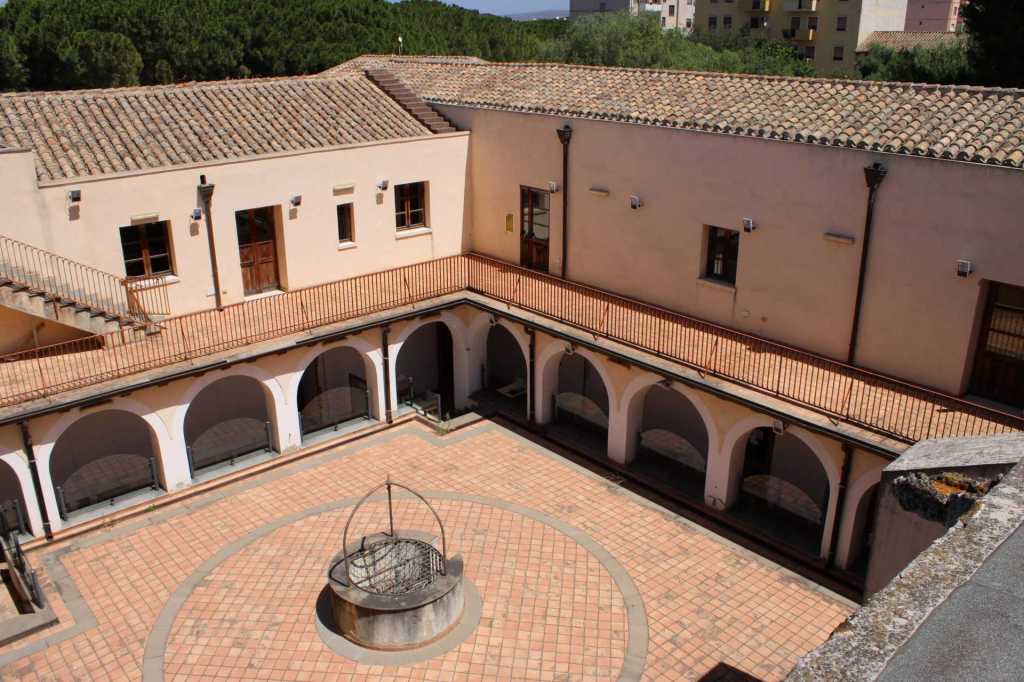
The Former Capuchin Convent (Ex Convento dei Cappuccini) is located in Quartu Sant’ELena – in Via Brigata Sassari.

 Alirio Diaz International Guitar Festival